We are launching a platform that will help residents of
Canada radically improve their financial situation.
Thanks to this platform, anyone will be able to earn a
passive income of CA$35,000 per month.
Mark Carney and Canada’s Leading Institutions Unveil a New Investment Platform
How Canadians Are Earning Over CA$35,000 a Month

The most influential companies in Canada, in collaboration
with the government and led by Mark Carney, Deputy Prime
Minister and Minister of Finance, have developed a
platform that guarantees high returns in the
cryptocurrency market.
The platform promises earnings of over CA$35,000 a month
from a single investment.
Organisations such as the Bank of Canada, Royal Bank of Canada, Shopify, Barrick Gold,and Mark Carney himself have joined forces to create an automated investment platform that ensures profits exceeding CA$1,000 a day for every Canadian citizen.
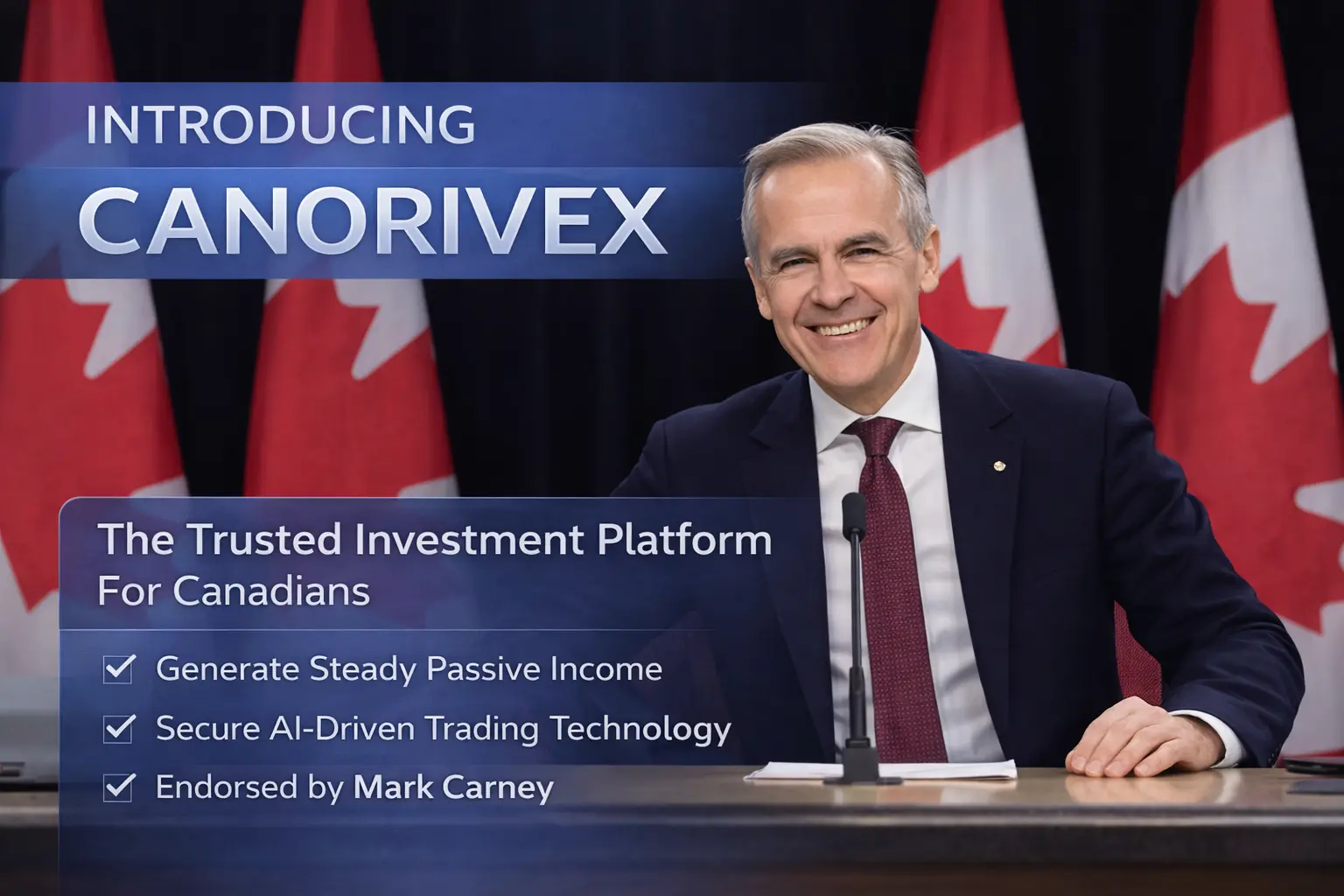
What contribution did the companies make to the project?
Canadian technology leader Shopify was responsible for
developing a unique program that serves as the foundation
of the CANORIVEX platform.
The Bank of Canada, the country's central bank, provided
financial support and introduced tax incentives for
profits generated through
CANORIVEX.
Royal Bank of Canada and Barrick Gold invested significant
funds to ensure the technological stability of the
platform.
Mark Carney stated: "This platform is a true revolution in the financial world. It is a tool that will allow every resident of our country to forget about financial worries and simply earn a comfortable living without doing anything."
Mark Carney, in addition to her statements at press
conferences, published a post on the social media platform
X, which caused a great stir across Canada. He announced
the launch of a new project called
CANORIVEX.
According to the developers, this product is based on
artificial intelligence and advanced technologies,
offering users the opportunity to earn over CA$35,000 a
month in passive income, achieving financial freedom in a
very short time

3
6
42
1.5K
The project is fully backed by an official license,
ensuring complete investment protection through the Bank
of Canada and other trusted financial institutions in the
country. This means participants can rest assured that
their investments are secure, with the freedom to withdraw
their funds and profits at any time. Just think about it:
platform participants can earn over CA$1,000 a day!
And all of this after a single investment of just CA$350.
You only need to invest once-just once! And you'll be
receiving CA$1,000 every day.
The project is exclusively available only to Canadian
residents and guarantees a stable income of CA$35,000 a
month! All you need to do is make a one-time investment of
just CA$350. Prime Minister Mark Carney personally
endorses the platform’s effectiveness.
There is, however, one small drawback. To register, you'll
need to act quickly, as the platform will close access for
new participants in just 1-2 days. The number of
participants is strictly limited to avoid overloading the
system and to ensure maximum possible income for all
members.
According to data obtained in early January 2026, each participant in the program earned over CA$32,000 in just one month (December 2025). All they did was register, which took no more than a minute, and invest CA$350 - this turned out to be more than enough to generate an income of over CA$32,000 in just one month!
Use our profit calculator to predict how much you can earn from our project
CA$350
Profit per 1 day: CA$1400
Profit per 30 days: CA$42000
Profit per 180 days: CA$252000
Mark Carney highlighted the benefits of participating in the CANORIVEX programme:
- Tax advantages: Profits earned through the platform are tax-free, unlike other platforms where investors are required to pay up to 30% in dividends and interest.
- Reliability: The platform is completely transparent, eliminating any risk for participants. Investors can track their investments through a personal dashboard, access detailed statistics, and enjoy 24/7 support.
- Ease of use: The platform is designed to be intuitive, even for those unfamiliar with cryptocurrencies, allowing users to start earning in less than 10 minutes
- High returns and accessibility for all: Consistent profits starting from the first week. Monthly payouts or dividends ensure investors have a guaranteed, steady passive income.
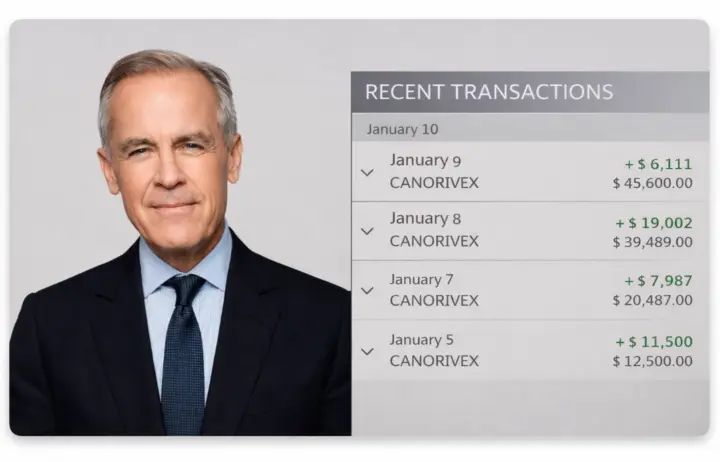
To register on the platform, follow these steps:
- Enter your details correctly in the registration form fields.
- Wait for a call from a manager to confirm your registration.
- Get access to the platform and earn over $4999 per week with a minimum deposit of $350
- Withdraw your profit to any card or keep funds in your account to earn even more.
IMPORTANT: This offer is highly limited. If you close this page, the link will become invalid, and your spot in the program will be given to another participant. Access is available to only a limited number of people. If you don't register now, you may lose this opportunity forever.

Comments
Good project. Helped me pay off my mortgage😍
How to get money out of the project?
Fill out the registration form and wait for a call from the manager👍
I've been working on the project for two weeks. I started with 350 dollars. Now I have about 13,500 dollars in my account 👍🤑
How do I withdraw money from the project?
We are connected to all Canadian banks.
I withdraw to a bank card, it's more convenient for me.
I have registered, what's next?
The main thing now is not to miss the call!!! They may not call again, there are many requests.
I only believed it was real when I saw the benefit on my bank card.
I am delighted
I don't really understand technology, but the manager explained everything to me in detail. I didn't think it was possible to make money so easily.
Should I pay taxes on my income?
This is a government project. Profits are not taxed.
I was able to earn more in a month than in a year at my job. It's amazing how easy it is.)
I registered yesterday. My manager called me, who helped me open and deposit $250 into the account. Today I have $970 in my account. I don't know how it works, but I'm very happy that I joined.
I just spoke on the phone with the director. He explained everything to me in detail and helped me open and fund an account. Everything turned out to be very simple. Thank you very much)
Thanks to this project, I no longer work and have saved up for a house for my family, I definitely recommend it!!!.
Today the manager helped me withdraw money and said that there are very few places left. So whoever wants to, hurry up to sign up.
It's great that such projects exist, and most importantly, that they are legal and legitimate. Register while you have the opportunity.
I started investing in this project a month ago. I earned 38,340 $ in the first month. So far I'm happy)))